Full restoration of both jaws with implants when no teeth remain
A 39-year-old patient with no remaining teeth moved from uncomfortable full dentures to fixed metal-ceramic restorations on basal implants in both jaws.
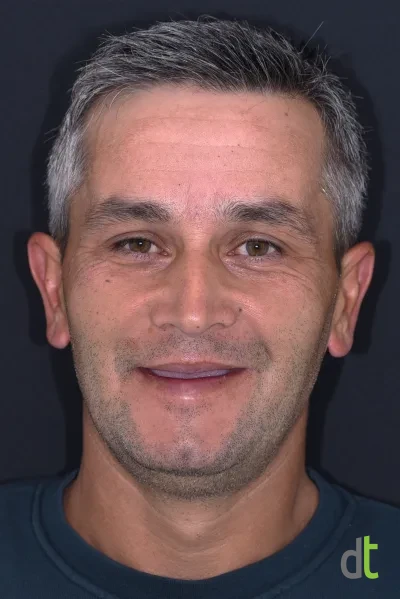
Before

After
Case at a glance
Scope
Upper and lower jaw
Method
12 + 8 basal implants
Restoration
Fixed metal-ceramic bridges
Timeframe
In this case: Monday–Friday
Initial condition
From dentures to a fixed solution
The patient had no remaining teeth and was using uncomfortable full dentures. The lack of stable support made eating and speaking difficult and limited the smile.
Bone loss, the reduced and porous bone volume in strategic areas, smoking and a history of bruxism were taken into account in the planning.
Diagnosis and choice
The clinical examination, OPG and computed tomography confirmed the complete absence of teeth, the changed bite and the limited bone volume in zones that were important for planning.
Imaging and follow-up
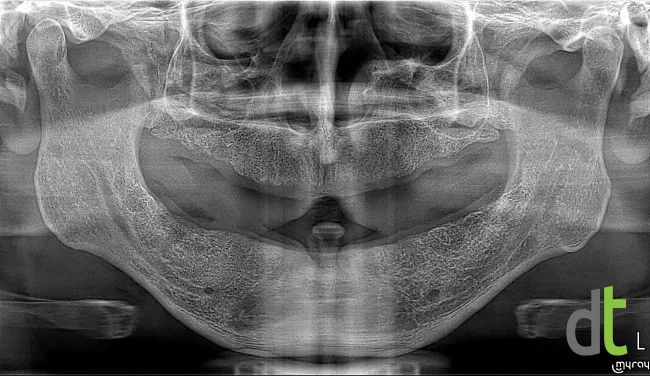
Before
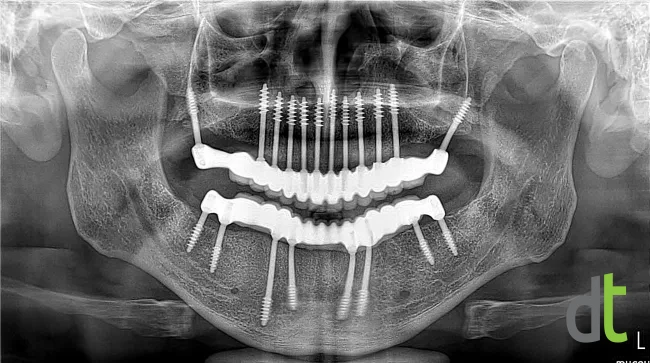
After
Individual plan
Chosen plan
Twelve basal implants were placed in the upper jaw and eight in the lower jaw, after which metal-ceramic bridge restorations were fixed.
Why basal implants?
The basal implants made it possible to use stable cortical zones and to distribute the load across more points of support. The choice was made after an individual assessment, not only because of the desired timeframe.
Stages
The Monday-to-Friday timeframe applies only to this clinical case and is not universal.
Result
A fixed bite, chewing function and the appearance of the smile were restored. The patient moved from unstable dentures to fixed restorations in both jaws.
Individual factors: The approach, the number of implants, the restoration, the timeframe and the result are determined after an examination and imaging.
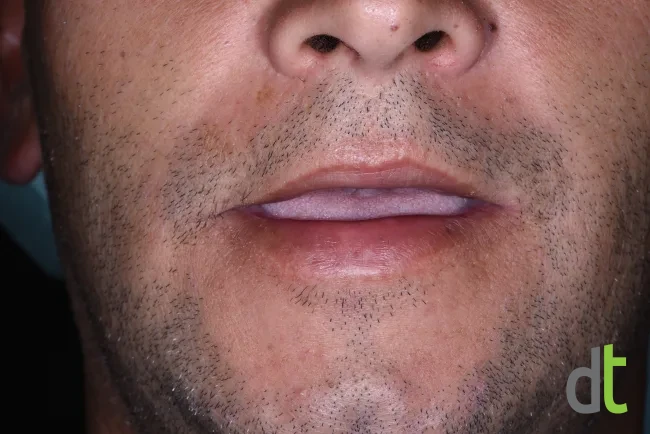
Before
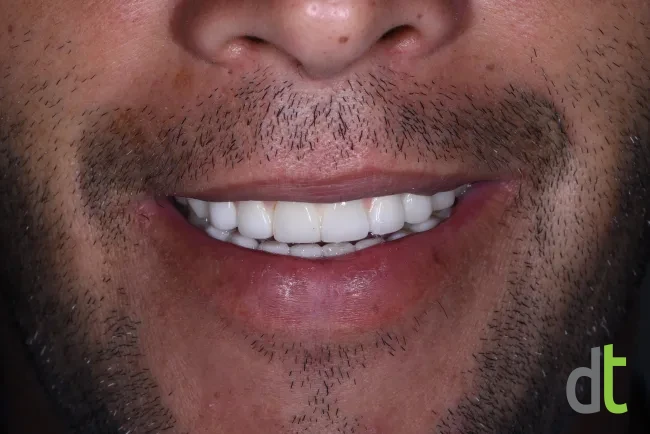
After
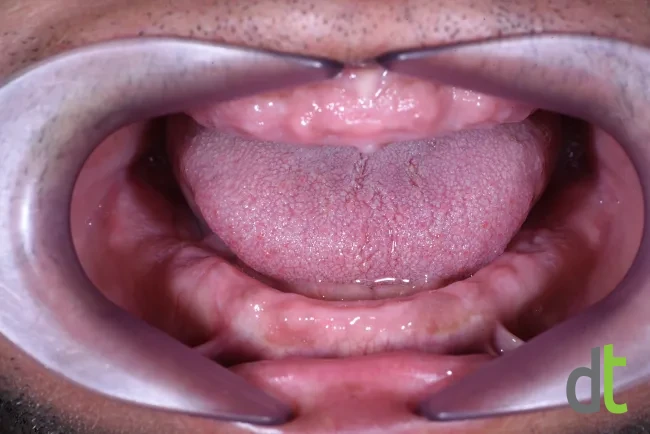
Before
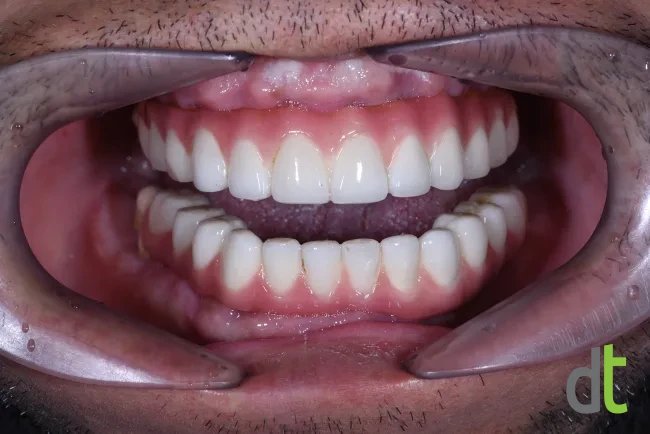
After
Treatment and clinical review
The case was challenging both surgically and prosthetically. The patient had no remaining teeth, with reduced and porous bone volume in strategic areas, and the dentures did not provide the necessary comfort. There were no reliable references for the previous shape and position of the teeth, and the history of bruxism required careful restoration of the bite and distribution of the load. Through precise planning and close work with the dental laboratory, we made fixed restorations that restored function and the smile within the specifically planned working week.
Common questions
In certain cases they can be suitable, because they use stable cortical zones. The decision is made after an examination and imaging.
No. The timeframe given applies only to this patient and depends on the clinical conditions and the individual plan.
They are important risk and functional factors in planning, maintenance and review visits.
Daily hygiene, individually recommended aids and regular follow-up are needed.
Are you looking for a fixed solution when teeth are missing?
The first step is a clinical examination, imaging and an individual plan.
The approach, the number of implants, the restoration, the timeframe and the result are determined after an examination and imaging.