Full restoration of both jaws with implants and metal-ceramic crowns in bone loss and a reverse bite
A 58-year-old patient who smokes was looking for a fixed and prompt solution for many missing teeth, mobility and displacement of the remaining teeth, pain with cold, and eating mainly on the front teeth. After clinical and imaging diagnosis, both jaws were restored with implants and directly fabricated fixed metal-ceramic restorations.
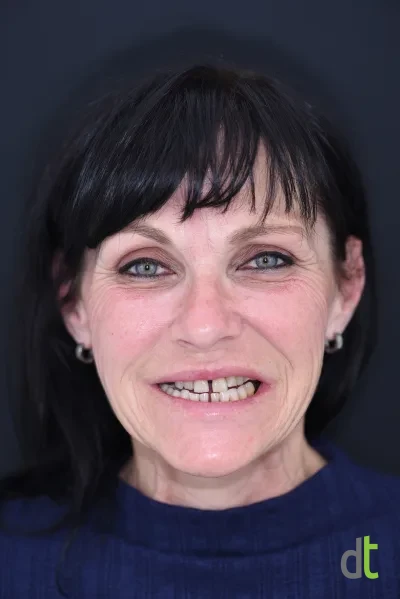
Before

After
Key facts
Scope
Upper and lower jaw
Method
Corticobasal implants with direct prosthetic restoration
Implants
10 in the upper jaw and 8 in the lower jaw
Actual timeframe
From Monday to Friday, within one working week
Restorations
Long-term fixed metal-ceramic bridges
Notable features
Bone deficit in the upper molar areas, and a reverse and cross bite
Initial condition
Many missing teeth, a reverse and cross bite, mobility of almost all the remaining teeth, old metal-ceramic bridges on compromised teeth, and an enlarged tongue were found. The patient eats mainly with the front teeth and reports sensitivity and pain with cold. She smokes and has a long-standing fear of dental treatment.
Diagnosis
A clinical examination, bite analysis, an orthopantomogram and computed tomography (3D) were carried out. In the upper jaw, especially in the molar area, a significant bone deficit and a strongly pneumatised maxillary sinus were found; the clinical record notes a bone thickness of under 2 mm.
Imaging and follow-up
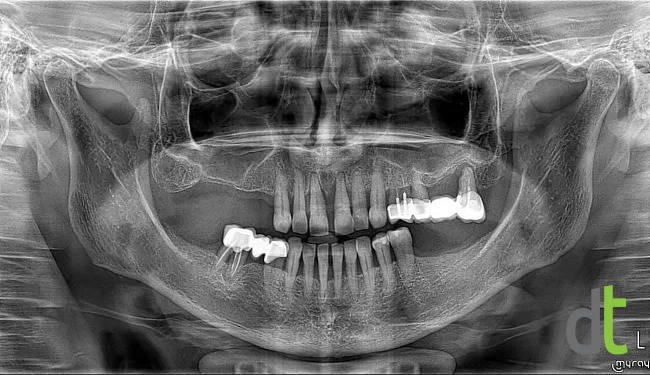
Before
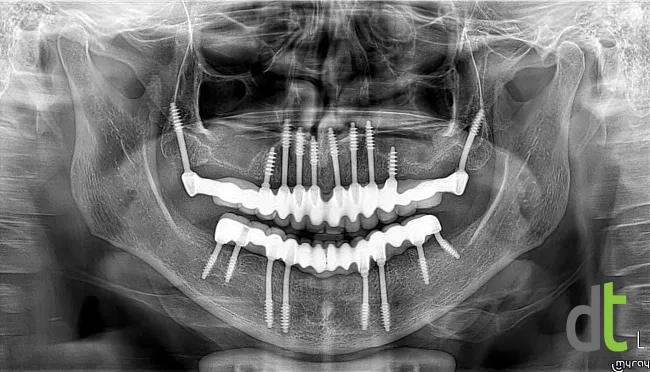
After
Individual plan
Chosen plan
An individual plan was chosen, with corticobasal implants, without intermediate provisional restorations, and with direct fabrication of fixed metal-ceramic bridges on the implants.
Why this approach
The approach was chosen because of the combination of insufficient bone in the upper jaw, the features of the bite, the need for a fixed solution, and the wish to avoid a sinus lift and multi-stage bone addition in this specific case.
Stages
Result
In this case the chewing areas, function and appearance were restored. The substantial change in the bite provides better comfort when chewing, and the new fixed restorations change the smile and the facial appearance. The patient is recovering as planned and is followed at review visits.
Important: Every clinical case is individual. The approach, the number of implants, the surgical stages required, the timeframe and the result are determined after a clinical examination and imaging, and cannot be taken as a promise of the same result for another patient.
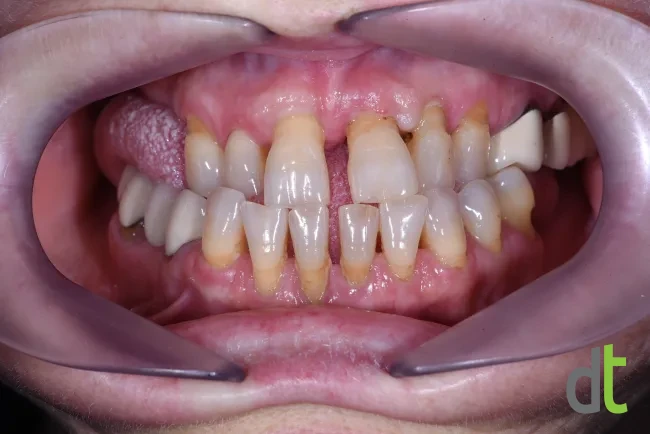
Before
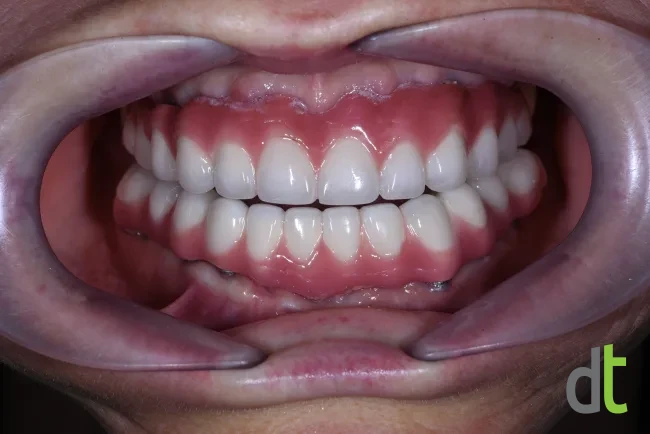
After
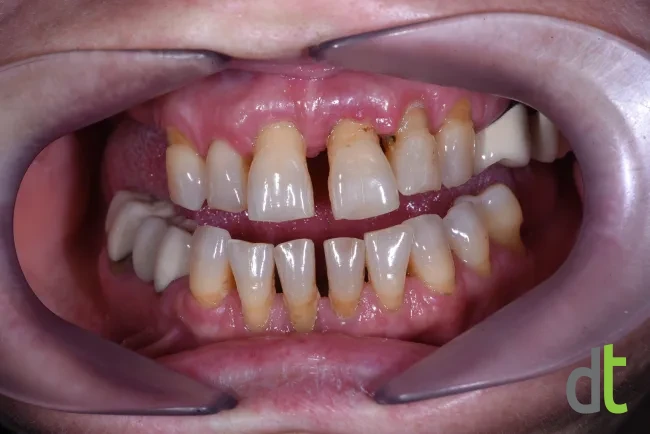
Before
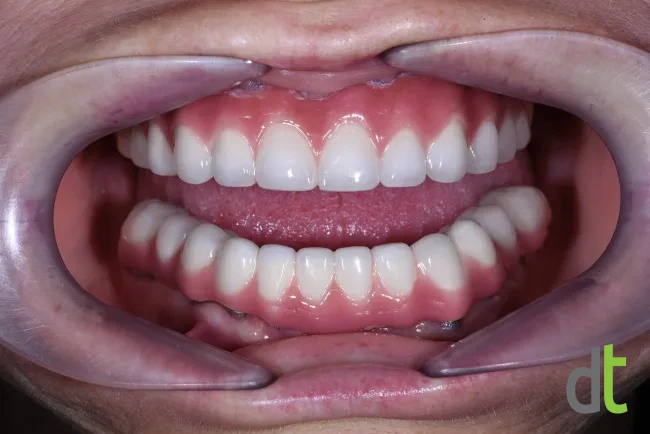
After
Clinician’s comment
The case combines a long-standing orthodontic problem, an incorrect bite, absence of chewing teeth, an enlarged tongue and a strong wish for a short treatment. In the area of the upper molars the available bone was under 2 mm, and the patient wanted to avoid dentures and multi-stage bone reconstruction. The most complex task was not only the surgical positioning of the implants, but also the prosthetic restoration of a substantially changed bite in a limited timeframe. Every stage, from planning and stability to guidance of the contacts between the two restorations, was decisive. The patient recovered as planned, and follow-up showed a good functional and aesthetic result for this specific case.
Common questions
Because of the combination of a significant bone deficit in the upper jaw, a change of the bite, the need for a fixed solution, and the aim of avoiding a sinus lift and multi-stage bone reconstruction. The decision is individual and does not mean that the same method is suitable for every patient.
Yes, but the timeframe depends on the bone condition, general health, the bite, and the surgical and prosthetic plan.
In this specific plan, direct fabrication of fixed metal-ceramic bridges was chosen. A decision like this is possible only when the clinical conditions and the stability achieved allow it.
Smoking is a risk factor, but with the specifically chosen implant system it is not a problem and must be discussed during assessment and follow-up. The suitable method is determined only after an individual examination and diagnosis.
Are you looking for a fixed solution for missing teeth or a bone deficit?
The first step is diagnosis and an individual plan.
Every clinical case is individual. The approach, the number of implants, the surgical stages required, the timeframe and the result are determined after a clinical examination and imaging.