Full restoration of the upper and lower jaw in bruxism
A 61-year-old patient sought a fixed solution for missing teeth in the posterior areas, a failing metal-ceramic bridge in the upper front, periodontal problems and bruxism. After a clinical examination, an OPG and computed tomography, both jaws were restored with basal implants and permanent fixed metal-ceramic restorations.

Before

After
Key facts
Scope
Upper and lower jaw
Method
Basal implants
Implants
12 in the upper jaw · 8 in the lower jaw
Actual timeframe
Monday–Friday
Initial condition
The patient reported mobility and chipped ceramic on a bridge in the upper jaw. There were missing teeth in the posterior areas, a failing metal-ceramic bridge in the upper front with mobility, and periodontal disease affecting all the remaining teeth. Prolonged eating mainly on the front teeth had led to overload, discomfort and further loosening.
Diagnosis
A clinical examination, analysis of a panoramic radiograph (OPG) and computed tomography were carried out. The periodontal condition, the available bone volume, the size of the maxillary sinuses, the deep bite, and the load related to night-time clenching were assessed.
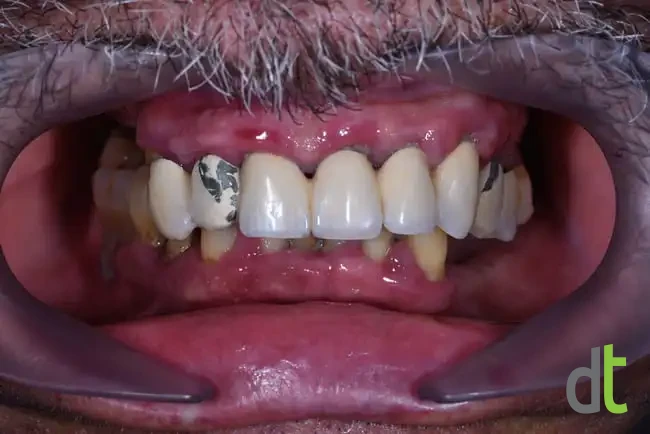
Intraoral condition before treatment
Imaging and follow-up
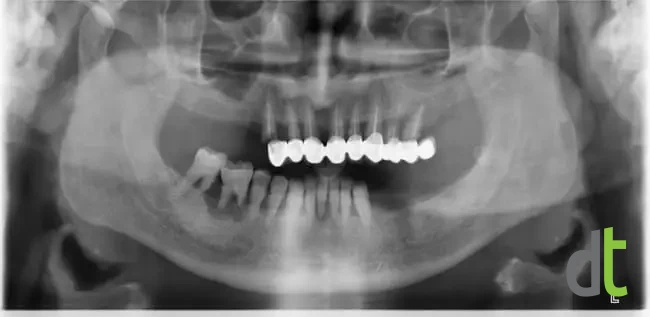
Before
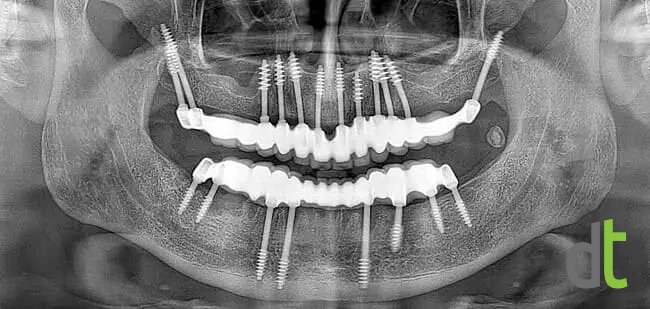
After
Individual plan
Chosen approach
An individual plan was chosen, with extraction of all the compromised teeth, placement of basal implants, and permanent fixed metal-ceramic bridge restorations on the implants. Twelve implants were placed in the upper jaw and eight in the lower jaw.
Why this method?
The combination of missing chewing teeth, periodontal problems, limited bone volume, large maxillary sinuses, a deep bite, and the need to restore a normal chewing load requires strategic planning. In the upper jaw, stable cortical support zones were used, including two implants in the tuberopterygoid space. The approach also takes bruxism into account, which requires precisely planned contacts between the upper and lower restoration.
Stages
Treatment was carried out from Monday to Friday. The timeframe is specific to this patient.
Result
Appearance, chewing function and bite height were restored with fixed restorations on implants. The contacts were planned with bruxism and a controlled distribution of the load in mind.
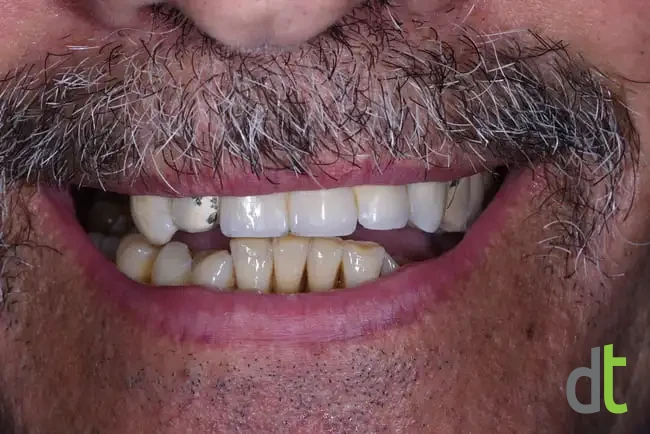
Before
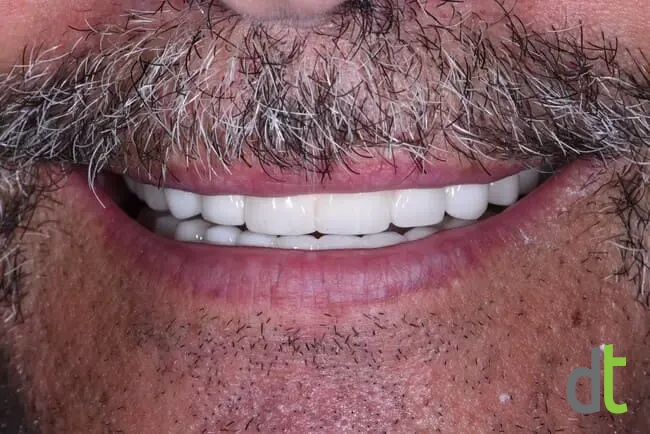
After
Before
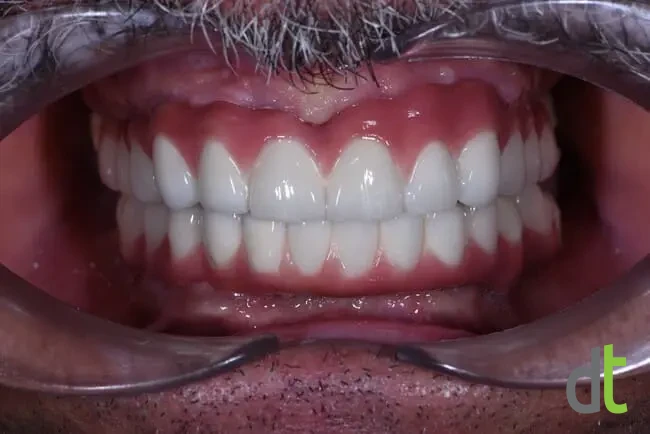
After
Note from the treating dentist
For this patient the leading problem was not only the missing teeth. Prolonged eating mainly in the front had overloaded the remaining teeth, and the deep bite and the bruxism complicated the prosthetic planning. The limited bone volume and the large maxillary sinuses required strategic positioning of the basal implants, including two implants in the tuberopterygoid space. With night-time clenching, it is especially important that the contacts between the restorations in the upper and lower jaw are precisely balanced. The long-term result also depends on regular review visits and strict adherence to the treating implantologist’s instructions.
Common questions
No. This is the actual timeframe for this specific case. The timeframe depends on the clinical and bone condition, the extractions required, implant stability and the individual prosthetic plan.
The choice was made after clinical and imaging diagnosis because of the combination of periodontal problems, missing teeth, limited bone volume, the anatomy of the sinuses, and the need for a fixed restoration of both jaws.
Night-time clenching increases the load on the teeth and the restorations. The bite contacts, the reviews and adherence to the individual instructions are therefore an essential part of the plan.
No. The approach is determined individually after a clinical examination and imaging.
Are you looking for a fixed solution for missing or compromised teeth?
The right plan is determined after a clinical examination and imaging.
Outcomes, timeframes, and the approach are individual.