Upper jaw restoration with implants in bone loss, without a sinus lift
A 70-year-old patient sought an urgent fixed solution for the upper jaw, with fractured zirconia restorations and pain and mobility related to peri-implantitis and periodontitis. After a clinical examination and analysis of the OPG/CBCT, an individual plan was carried out, with removal of the problematic two-piece implants and restoration with 11 corticobasal implants and a fixed metal-ceramic bridge.
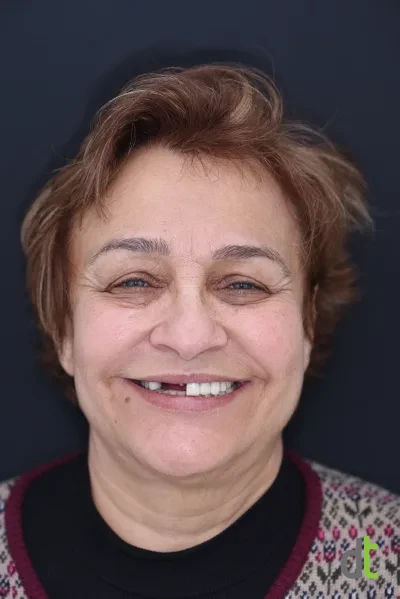
Before

After
Key facts
Scope
Upper jaw
Method
Corticobasal implants
Implants
11 implants
Actual timeframe
Monday–Friday
Initial condition
Fractured zirconia crowns were found in the upper front, together with mobility of restorations on two-piece implants already placed on the left and the right, peri-implantitis around the implants, and periodontitis affecting the remaining teeth. The patient reported pain, difficulty eating and an urgent need for a fixed solution.
Diagnosis
The treatment plan was prepared after a clinical examination and analysis of a panoramic radiograph and CBCT. Bone loss, the condition around the existing implants, the anatomical zones around the sinuses, the bite, and the options for stable cortical anchorage were assessed.
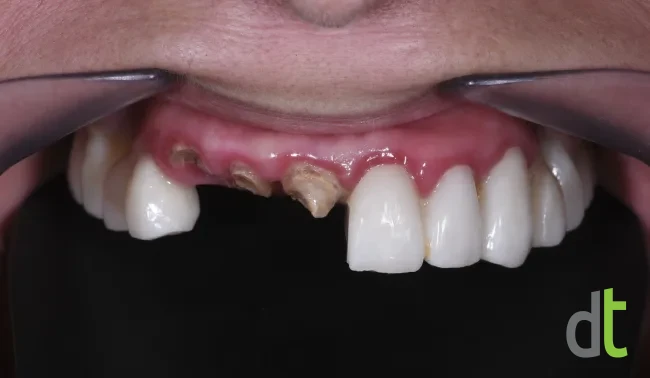
Intraoral condition before treatment
Imaging and follow-up
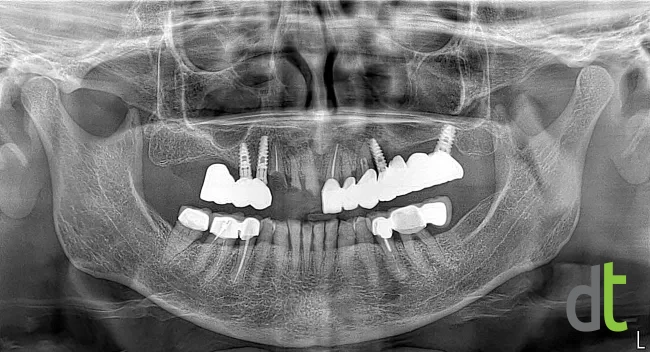
Before
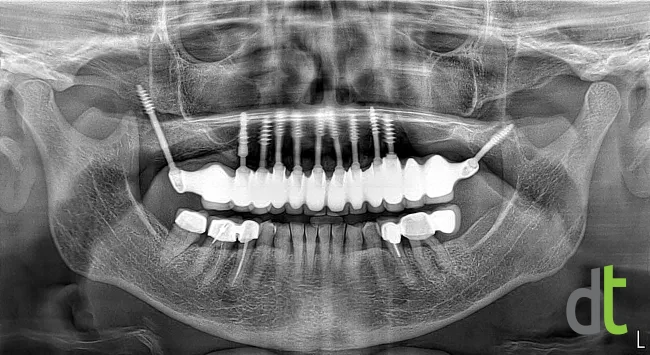
After
Individual plan
Chosen approach
An individual plan was chosen, with careful removal of the existing two-piece implants, placement of 11 corticobasal implants, and immediate loading with a permanent fixed metal-ceramic bridge. In this specific case, the patient’s explicit wish for the shortest possible treatment time and the smallest number of surgical procedures, because of a poor experience with previous implant treatment abroad, together with the anatomical and clinical factors present, directed the choice towards treatment without a sinus lift.
Why this method?
The decision took account of the significant bone loss and the consequences of peri-implantitis around the existing implants. The aim was to use stable cortical zones, including the floor of the nose and the tuberopterygoid space, to correct and raise the bite, and to restore function and appearance with a fixed restoration. Avoiding a sinus lift is the result of the individual diagnosis and is not universally applicable to every patient.
Stages
Treatment was carried out from Monday to Friday. The timeframe is specific to this patient.
Result
Eating function, appearance and a stable fixed bite were restored. The unstable and painful restorations in the upper jaw were replaced with a fixed bridge.
Before
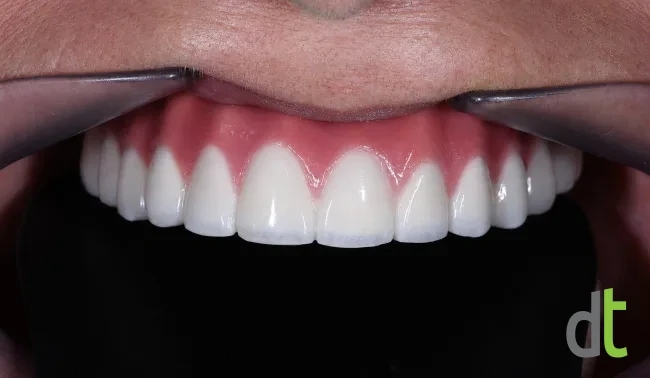
After
Note from the treating dentist
The case was challenging because of the combination of impaired eating and appearance, peri-implantitis around two-piece implants already placed, periodontitis, and a large volume of bone loss with very thin cortical bone. Removal of the old implants had to be precise, so that the available bone volume around the sinuses would be preserved. The anatomical features made placement of the tuberopterygoid implants more difficult. The surgical part was carried out under conscious sedation to reduce stress in a very anxious patient. In this specific case the treatment was completed within five working days, with a fixed restoration of function, the bite and the smile.
Common questions
Yes, if specific implant systems and brands can be used. The duration still depends on the individual clinical conditions and the treatment plan.
Yes. In this case treatment without a sinus lift was possible after assessment of the bone and the anatomical conditions. The method is chosen individually.
To reduce anxiety and stress during the surgical procedure. Whether it is appropriate is assessed individually.
Are you looking for a fixed solution for problematic implants or bone loss?
The right plan is determined after a clinical examination and imaging.
Outcomes, timeframes, and the approach are individual.